Ashtavakra part 2 - The learning continues

Updated: Jan 26
This is the part 2 of ashtavakra Gita insights, as they appeared on listening to the video series.
The blog on part 1 is here.
The concepts in the blog are given in normal font. As understood while listening to the videos..
Italics are putting things into my perspective and discussing some implementation as per my limited understanding.
Mind stays after the body is dropped:
It is the mind, which craves for experiences, which gets one to take birth again and again. Hence the mind stays, even after the body is dropped. To have an experience, you need company, there must be 2 or more to create an experience. So when there is a mind, there is dwaita. Once you are free from the mind, comfortable being alone, in adwaita, there is no rebirth. There is no illusion, There is no maya, there is one and Only shiva, the formless Brahman.

The indication that you are getting free from the mind and experiences, comes when you are comfortable alone. You don't seek company. You don't crave for travels or experiences. It is perfectly ok to do nothing. Slowly the desire to seek experiences is going away. What is needed for the roles is done.
There are some who needs company, compulsively. If not someone in person, they used to take to watching tv, reading books, listening to music, or now a days social media.
As long as you are comfortable with both, being in company or otherwise, there are no mind games! You are neither seeking nor avoiding company. You are as comfortable in a crowd, a few people, 1 person or just alone.
Difference between thinking and reflection:
Thinking is about something you want to know. Reflection is the realisation that you are already that. There is no thinking needed, when you reflect and no reflection when you think. There is an effort, a chase in thinking, where the mind is active. There is no chase in reflection. In reflection, One is in silence, in thinking, one is active. You swing between these two states and ultimately be more and more in reflection and then eternally in state of self realisation! This is a slow process. When the thinking stops, the reflection starts. But thinking is the beginning of the process. You can not reflect, unless you end thinking, where there is nothing left to think about!

The measure is of reflection is the duration of time, you can sit thoughtless! No chanting, no focus, no concentration. Just be. Put a timer and sit still. When a thought comes, open your eyes and stop the timer. Slowly this duration will increase. My earlier experiment was being thoughtless for 24 minutes. I have not tried it again.
Being comfortable in 3 states, thoughtless, thinking or just an inspirational thought, is the natural state. You are neither seeking thinking nor seeking reflection. When this happens, time in reflection state is more.
True disciple:
In a true disciple, there is no desire to become a senior disciple, favourite disciple or successor to a guru or a guru himself. There is no desire to give any advice. The admission that what I know is not based on self experience is firm. The acceptance that i know very little leads to being open to learn. This is very rare. The disciple is ready to leave the past and make a new beginning. The discipline looks for a revolution within. Not just an improvement. This transformation, and not a transition, is possible only by the grace of a satguru.
A disciple does not desire any position. He is not senior or junior. He simply serves everyone, as he sees guru in everything. Value addition is the only driver. Value addition is done playing all the roles in life.
Giving without expectation:
Even if there is an expectation of getting a thank you, giving has no meaning. There is an attachment to the expected response! This is not giving. This is a trade.
In our culture, we are grateful that the person has accepted the daan. Hence dakshina is given as a token of gratitude. Knowledge was the greatest daan and the guru dakshina was voluntary, given as per the capacity of the disciple. Rarely gurus asked for a guru dakshina. They did so, only for a specific purpose, from a specific student. When a priest performs a puja, he is giving punya daan to the host. The host gives dakshina as a token of gratitude. This is our culture of appreciation.

Both the person accepting daan and the one accepting dakshina are not expecting anything. They simply accept. Many times, we are not aware that we are giving daan and getting dakshina and the other way around. Dakshina could be a thought, a thing or anything. The awareness is not easy at all, as we tend to get caught up in the game of maya, which is nothing but merging with the role!
Moving beyond roles:
In adwaita, there is only one. So who is playing the role with whom? Enjoy the play. Go with the flow. This is a fundamental insight, that even when we play roles, we are playing with us, in a different form.

It is like a set of golden ornaments, each looking different, but all gold. The utility comes from the shape, the value comes from it being of gold.
Difference between vidyarthi, the student and shishya, the disciple:
Vidyarthi learns, accumulates knowledge, learns and thinks. The discipline has the intention of being with the one consciousness, not just knowing. There is only transformation, not improvement in a disciple. Some examples of disciples being transformed are Swami Vivekananda, sant dyneshwar, essentially, any committed disciple gets transformed, over time, or in an instant!
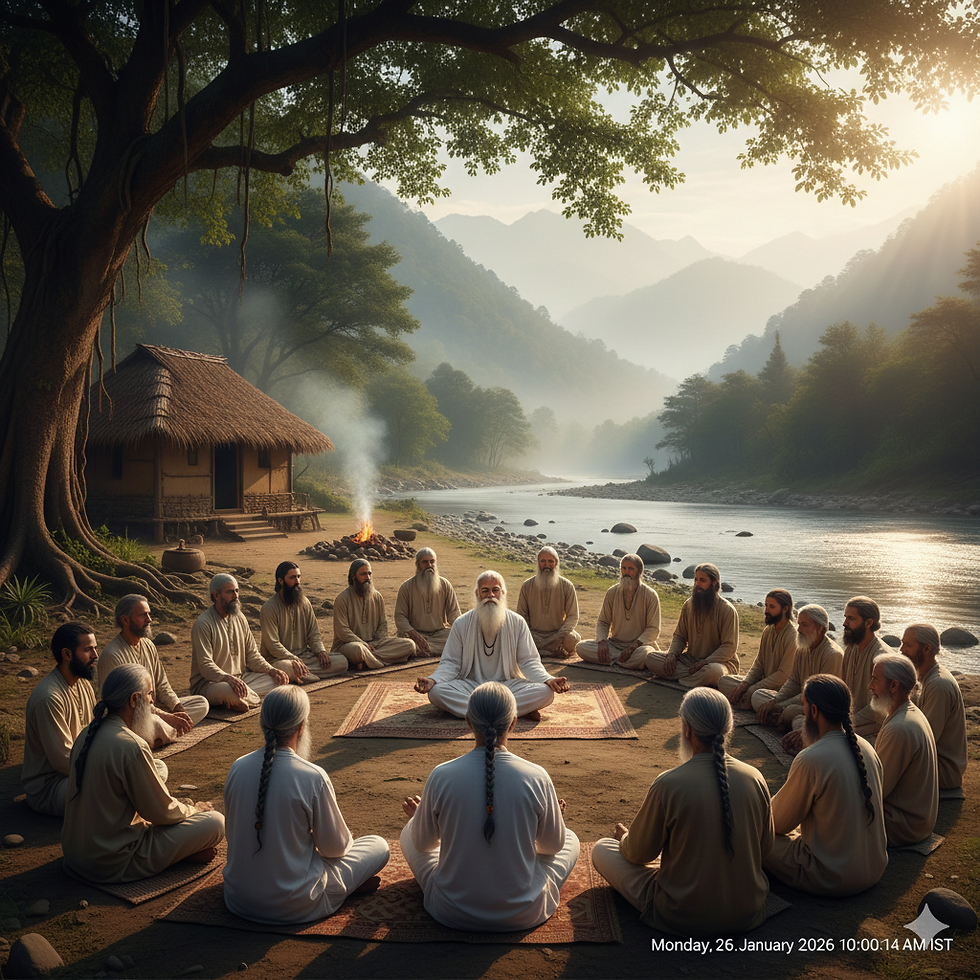
There is a transition from vidhyaarthi to shishya. It is never a jump. Its a progression. Most of the concepts look mutually opposite. But they are always with a context. They explain subtle differences, different stages in the journey etc.
Difference between follower and disciple:
A follower sees matching thoughts and opinions. Following is intellectual. Some opinions may not match some may not.
Whereas, A disciple accepts the guru in its completeness and vice versa. The connection is with the heart, not the mind! Here faith is primary, logic is secondary. Another way to look at it is that the disciple has overcome the limits of thinking and has completely surrendered to the guru.

This is also a journey, you start with being a follower and then you slowly become a disciple. In today's world, finding the right guru, who is truly enlightened is rare. Most gurus are indirectly fuelling the greed and fear of their followers, rather than moving them away from these two primary emotions.
Satsang with gurus:
Satsang with guru scores over studying scriptures. Satsang, now a days means discourses, bhajans and kirtans. Satsang is much more. It is just being in the presence of enlightened beings. Gurus role is to make you independent. Realized. Out of mind games. Their anger is also an act for directing you for self realisation. Their satisfaction shows that your have reached your limit. Hence appreciation from a guru may be actually dangerous, as it stops you from progress!

Everyone thinks, one needs to see a guru, be with a physical guru. However, My guru in energy form is always with me in any manifestation as an event, person, book, thought, action. Even this video is the manifestation of my satguru, sant dyneshwar.
Once this is clear, you are not attached to any physical form of a guru. The guru element, literally meaning the remover of darkness is everywhere now! So the anger, satisfaction of the guru, are all also role plays. Nirvanashatakam states that i am shivoham. Na gurur naiva shishyam...
Being with guru is like being with a driving instructor, making figure of 8 and getting a license. The friends you make here are all learners, with the guru, operating the second clutch and brake and holding your steering wheel!
The question is, when will you get on the highway, stop and make friends in a similar path! The role of the guru is take you on the highway, not keep you in the driving school.

This is exactly what ashtavakra Gita does. It sets you on a highway of self realisation.
A journey where you are alone. In a convertible, feeling the air of life experiences and the sun and darkeness, and heat and cold... And just on the way. You don't care where you reach, as you are already free!
The ship is made to sail. Not to be in the bay!
Surrendering the effort is the ultimate step:
After all the effort, one realises that the effort is not going to get me to the final step. In yoga the first 6 steps take effort. The last 2 are effortless, when you just let go. When one becomes effortless, one gets ready for the final leap. That is the time self realisation happens. Buddha attained nirvana this way. He had reached the end of effort. Unless you are ready, realisation does not come. Hence dhyan comes before samadhi. Dhyan makes you ready for the final step. Dhyan happens in a state of deep relaxation, where one does nothing.

Sitting thoughtless is the key. When you sit without expectations, it will happen! When, you don't know! And actually, you don't care either.
Puja and rituals:.
That goal is to conduct the puja internally, as everything is within. The external puja is symbolic, and makes one ready for inner puja.

Here is the blog on shiv Manas Puja, which gives the profound insight that you yourself are Shiva itself.
Getting engaged with maya:
We forget that we are a witness, like a spectator watching a movie. We become a part of the movie. We cry, we laugh with the characters of the movie. It's like being a part of movie. Instead, we have to have awareness that it's the screen of consciousness on which the projection of mind is playing! That insight is enough for the realisation that you are a witness!
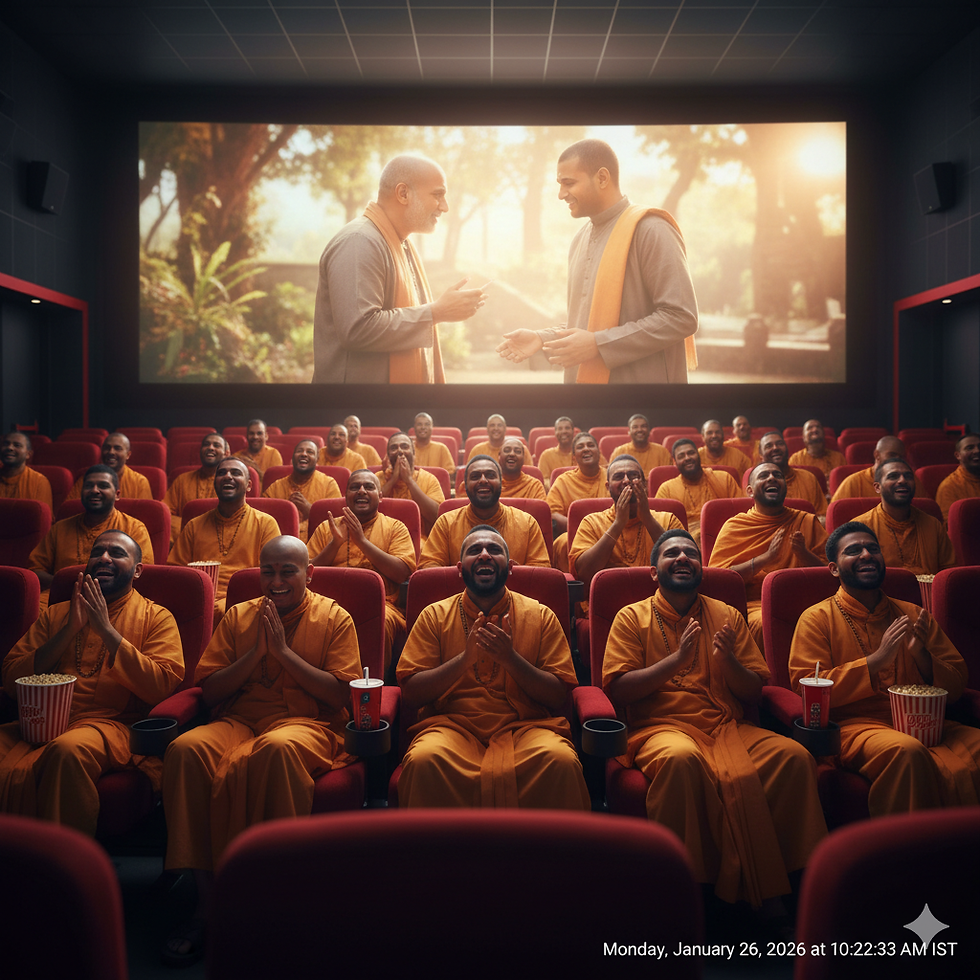
Anahata naada keeps this awareness. But to be aware of anahata naada, is the key!
I have many times forgotten about the anahata naada, only to rediscover, be aware of it, connect to it, when i am in silence. So being in silence periodically is the key, until such a time, that the silence is always within...
A misconception that Money is an impediment to freedom:
Money is not a medium to achieve freedom (moksha) hence it cannot become an impediment either. In fact it has nothing to do with freedom! This is an amazing logic. What can not give you something, it's absence can not give it either!
In ashtavakra Gita, raja janak himself does not give up his kingdom, either to seek enlightenment, not does he do so, after being enlightened!
In fact what you have or what you give up, has nothing to do with enlightenment.
Hence retaining money or giving it away, has actually nothing to do with freedom!

I am personally not a big fan of taking sanyas. Whatever has to be done, can be done while doing my day to day roles also. No need to give up roles. Its enough to know that it's a role! This is tough, but not impossible. Our guru, pragnya chakshu, gulabrao Maharaj, himself was a householder, with absolutely no impact on his spirituality. Lahiri mahasaya was a house holder, whereas some of his followers where sanyasis. This is an individual preference. None is better than the other and being in any state does not determine, your progress in self realisation.
however knowledge is a medium and can become a serious impediment because it is always related to the past and not the present. This is detailed in an earlier blog.
The first step is to know (effort needed with body, energy and mind). The second is to experience (blissful state with self). To their is to observe (no mind state) and the fourth is to merge (no i state). I know a little, experience a few moments. The stage of observer and merger are yet to come.
Love is adwaita:
The realisation that everything is one, leads to self love, which leads to dissolution of duality into one adwaita. As love brings everything closer and closer, to a point, when everything merges into self! The states of one to none to infinity are hence perceived as the same! There is no duality left. Whether expressed or unexpressed, one or many, manifested or unmanifested. A natural transition from love to adwaita becomes possible by observing that everything is one! Becoming an observer, as there is nothing else to do! Actually the observer, the act of observing and the object, all merge. There is no observer left.

In dhyana, the awareness of i am in dhyana remains. In Samadhi, the awareness is gone. The i itself dissolves.
A sudden transformation:
The transformation is not gradual. It is sudden. It happens in an instant. Abruptly. When it is least expected. The stabilization energy and grace by a guru is Vital in this moment, to maintain balance, as there is a high chance of being thrown here and there in energy, mind and body realms. The role of guru is to make one ready for this transformation. Not actually do the transformation! That one has to do on their own.

The final leap has not happened yet! When it will happen, who knows!
The origin of religion:
Description of experience at the moment of enlightenment has lead to writing, singing, talking about the divine experience. The point to note is that it's their experience.
People follow their experience of fasting, chanting, meditating, dancing etc. not knowing that it is not what got them there, but it's what they did after they got there! This is the fundamental difference.
But like every loving enlightened being, they have shared their path with everyone, not holding anything back.

Walk on the path that resonates within! As you evolve, you will know which path resonates, and it may change over a period of time too. Everyone has a unique path. There is no formula for the final step.
It comes when it comes, hence it's elusive! Expecting it to come pushes it further. It comes when you least expect it.
Just like all schools, whichever language they teach in, essentially teach the same fundamentals, likewise, all religious paths, have to teach the same basic principles of love, kindness, non stealing, non accumulation, pursuit of truth etc.
Violence:
The initiation of violence done in the name of religion is nothing but an misinterpretation of the basic principles for power and control over others. It is very easy to spot this.
Pre empting violence by attacking first, responding to violence by violence does not breach any principles, as the first principle, that makes all other principles possible is self preservation!
How to identify if teachings are correct:
There are many conflicting teachings in many paths. Many books have been changed before publication or after publication, over time. How do you identify that the book has the right content and which part of the book has to be ignored?

For example manu smriti, (unlike the bhagwat gita, which has precise number of shlokas) the foundational book of sanatana has between 2500 to 3000 shlokas, which clearly indicates that content was added over a period of time.
In this book, it is clearly said that the varna of brahmana, khsatriya and vaishya is by karma and not by birth. By birth, everyone is a shudra. It is by karma that one uplifts oneself.
I was recently suprised to know that many countries have taken inspiration from this book, to draft their constitution, and bharat, the originator of the book, burns it's copies, as there are parts, which obviously where added on jatis and varnas by the British mostly, which are showing hatred by divide and rule! How ironic!
How are we a brahmin? This simply means that one of our ancestors was a brahmin. By our karma, are we a brahmin? Certainly not. We have no idea what the Brahman is. The one know the Brahman, is a brahmin. So why have this false ego of being a brahmin, of being superior etc. It has no meaning actually. One does not become a brahmin, just by rituals. There are many saints in Maharashtra, like sant dyandev, chokha mela, Narhari sonar, who where actual Brahmins, by their karma, not by birth.
This again puts the importance on purushartha or effort, and not on fate or bhagya.
Coming back to books. The content of any book has to be aligned to the 5 principles of satya, ahimsa, asteya, brahmachrya and aprigraha. If they are not, it's not the right teaching. So killing someone, in the name of religion, can not be justified, as it's not aligned to the basic principles.
Satsang.
In the company of enlightened people, there is a transmission of the energy of love from one to the other. This is the power of satsang. It happens on its own. It's effortless. Not intentional. Never miss a chance to be in satsang.
As your sensitivity increases, you can feel this. Can you list down a few people, or few places, that give these kind of love and every vibrations?
You can also feel the opposite, when you are in the company of restrictive people. You will feel the energy restrained.
This is just being aware. Different people have different ways to sensing this.
Our senses are not only for Material objects, but they also sense energy.
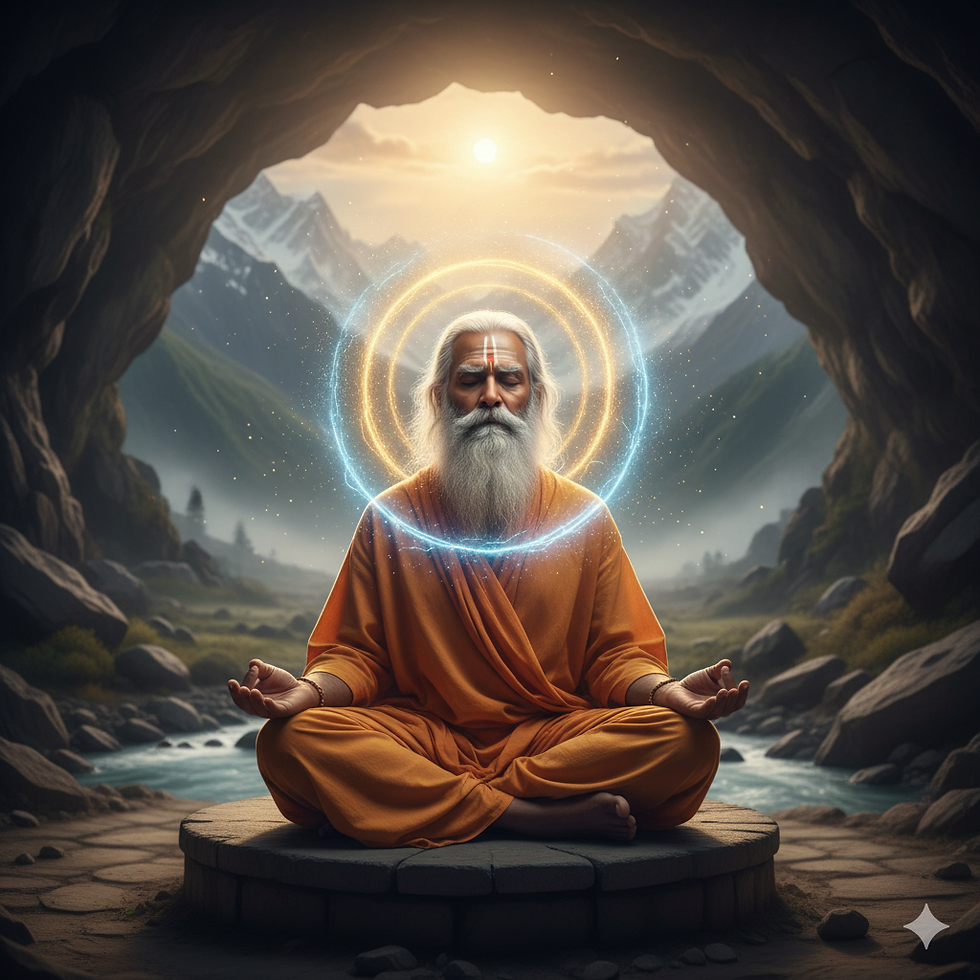
For someone, who is into the 5 states of kriya yoga with the senses pulled by the crown chakra inwards, the negative energies don't bother. There is hardly anything to receive from others now!
Renunciation:
When everything is one, who will leave whom? So where is the question of leaving maya. Shiva and Maya are now one and the same. The manifested and the formless are the same.
Once this is becoming clearer and clearer, one can lead the life of a householder and still be enlightened. Sanyas is a choice. Not a necessity.
Gold that does not glitter:
Today being Diwali, visited the tanishq jewellery store nearby. Observing my thoughts, there was no interest or awe or desire or attraction to the items in the store. These were just objects. I was thinking, other than visual aesthetics, what is the utility of these items? Nothing, actually. Gold has a perceived value, created by humans.

Like aluminum, if it's created in bulk, it will drop in value. Like lab grown diamonds have crashed the diamond market, i wonder, what will disrupt the gold market. Is this just an innovation away.. Something which will shake the global economy!
Wont getting something useful be better, or giving money for a cause that fulfills the needs of someone, better, like donating a laptop to a student?
These thoughts kept coming on and off, till it was time to leave.
Conditional happiness:
People have created conditions for living a happy life! Income, status, etc. These are things to have. When these desires are not fulfilled, emotions of anger, jealousy, greed, fear, depression take over.
Instead of having something to be happy, why not be happy in the first place! This single paradigm, is the key to suicide prevention, maybe!?
A simple flipping of sequence of doing having being, transformed to being, doing and having!
Being happy is the natural state. It not dependent on having. It only has to realised. That's all.
Being comfortable with death:
Not discussing, being in denial of death, believing that it will not happen to me, taking help of science to extend life, are all methods, to divert the mind from death. Something that is inevitable.
My friend, S is working on everything to do with longivity. Stem cells, nutrition etc. This is his domain on interest. He has invested in many companies in this domain.

Once he told me. I will live till 150. But, if i am alone, what is the fun? At that age, i can not form new friends! So i want all my buddies also to live till 150! Means 100 more years to write blogs for me and 100 more for him to work on his favourite domain! Haha! We had a good laugh over this!
But it's the body that finishes, not the self. This is the key. This knowledge makes one accept death as an event, not the end!
Now a days, the thought of death does not bother me. It will happen, when it happens, the way it happens. There is a higher level of acceptance now, than it was earlier. It's still far from total acceptance. Acceptance is q gradual process. It does not happen over night.
Body and mind:
We identify with the body and mind so much in our language today instead of saying, my body has a high temperature, we say, i have fever. Instead of saying, my mind has an emotion of anger, we say, i am angry.
We are not the body, nor the mind. We are actually observers of the body and mind! But the language, the conditioning, the people around us, have lead us to believe that we are the body and the mind!
This conditioning needs to be broken! Only Self awareness can break this. Self awareness comes in silence, in Dhyan. Everything else like rituals, study, satsang, makes you ready for it.
Doing vs observing:
The path of 6 steps of yoga is the path of doing. The path of ashtavakra is the path of observing.
My experience is that unless you reach the final 2 stages of yoga, combining, gyana and bhakti, the mind is not absolutely still to become an observer. So ashtavakra Gita is meant for only a select few, not for everyone.

Unlike Bhagwat Gita, everyone can not take away something from ashtavakra Gita! That is the reason, it is not very popular.
Bhagwat Gita, infact makes you ready for getting the essence of ashtavakra Gita!
The Movie plays:
The awareness is that the screen is consciousness on which the movie is playing! If there was no screen, there would be no movie! Being a movie, let it play. Observe.
This will not let you get involved emotionally and get carried away. You will be aware of emotions. That's all. This is being an observer.
Effort in the right direction:
We are taught to take effort to change things. Sometimes, it is just observing, that sorts things out. There is no effort, no friction, no conflict. Just going with the flow. Realising this, is only appreciated at a level with the mind is still.
Yogi restricts, bhogi desires more. Both are taking effort. Hence both have an ego.

However the effort taken by a yogi is superior as he is on the right path. A bhogi, however great effort he takes, will not attain self realisation, as his mind is too full of i, and the unending desire, which will keep him occupied in this lifetime and next!
An observer is neither is a yogi nor a bhogi. This is the crux of not being into attractions and aversions. The journey is from bhogi to yogi to being an observer!
No one can become an observer directly. It's not possible! This is the journey inwards. Tamo + rajo to satva to nothing. The journey of from bhogi to yogi to an observer and then dissolution of the observer itself.
My friend S, coined an interesting word bhyogi, for this. Which encapsulates this journey!
Desire to live and die:
They both come at different times in life. In young age, there is a desire to live.
In old age, there is a desire to die! What was there to experience is experienced. The body is old now. Time to leave it now. This is not wrong. The desire has changed as per the state of the body and mind both.

One does not have to wait till the body ages. Once this is accepted, it is clear that, both desires are the 2 sides of living! It's something that will happen now or later.
This acceptance makes one an observer! The observer sees both sides.
Absence of light is seen in darkness and absence of darkness is seen as light! Both actually co exist! These are like 2 sides of the same coin! The desire to have and the desire to leave are the 2 sides of the same coin! The key is to be an observer! Neither attraction. Nor aversion! This is the state of choicelessness!
Acceptance of having, awareness of doing and abundance of being is the key.
The Untouched observer:
Nothing touches the observer! Lives, deaths, Good and bad, dark and light, do not touch me. I am just an observer. Be an observer for all opposites.
See the opposite in every thing! It's there. That is observance! That is acceptance.
Light and darkness:
Darkness can not be created on its own. Lack of light appears as darkness. The only way to remove darkness is my light.
Ego or identities or roles are like darkness. It can be only removed by the light of self realisation. It can not be removed on its own. Just like darkness can not be removed on its own! It needs light to remove it.
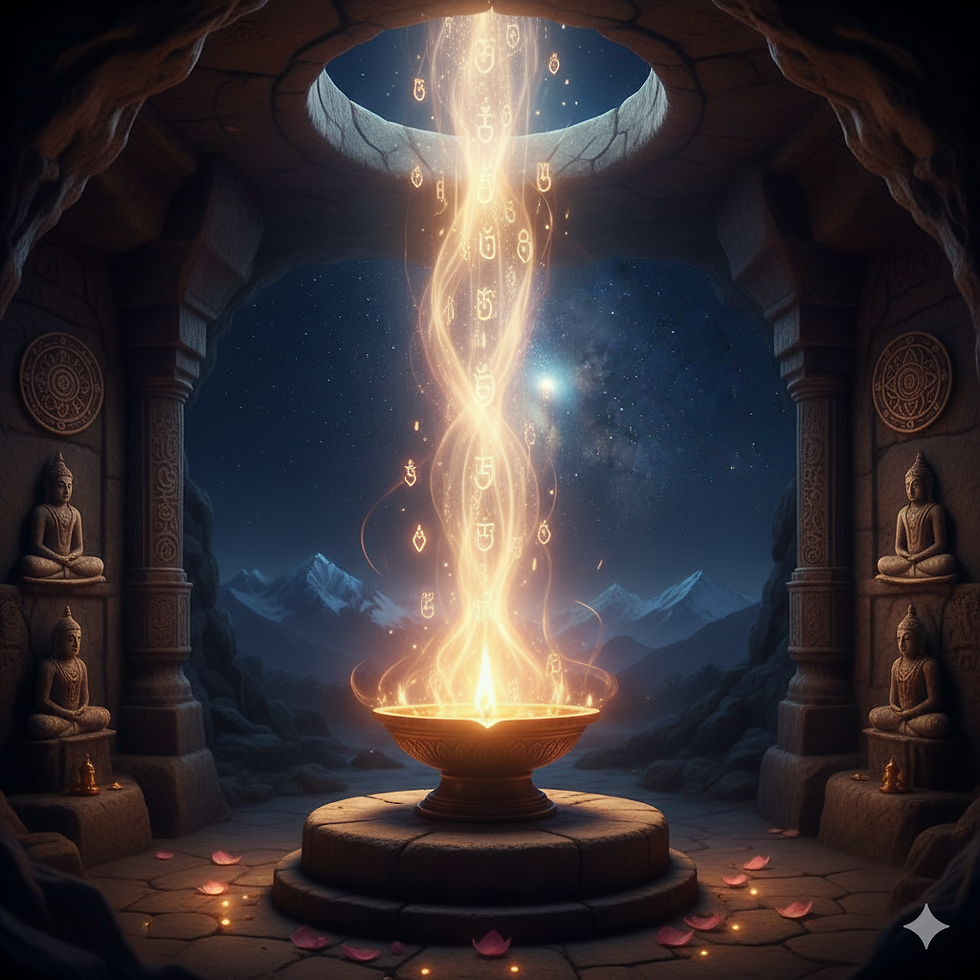
This is the light of self realisation, where the darkness of the ego disappears!
Labelling:
Is needed to identify objects in the material world. This is needed. Otherwise, there will be no distinction between two apparently Different objects, events as timelines, people, etc. observing that these are labels is the key! Shedding all the labels and seeing the essence needs courage. This is the journey of going from something to nothing. From company to solitude.
This is like appreciating the gold ornaments for their different shapes and sizes, while knowing that they are actually made of the same gold!
Seeing that the paper is paper whether it's a currency note or not is the quality of observer. This does not mean the currency note has no value. It has a value in material sense.

However, in case of demonetization, it makes the value of This currency zero! Paper only!
Know that the material things have value, in their own context. The one who knows both the material context and spiritual context, has the balance to become an observer.
An observer sees both aspects. It knows that in reality is a paper and right now, it's a currency, which is useful!
Blessing:
Blessing you with deep insights on becoming an observer! And ultimately, be unified with the act of observing and the object itself, realising a true adwaita state.

Comments